Organic Bedding Guide
Percale or Sateen? How Organic Cotton Weaves Change the Feel of Sheets
Two sheets can share the same organic cotton credentials and still feel like they belong in entirely different bedrooms. The secret is often the weave: percale tends to feel crisp, light, and cool, while sateen brings a smoother surface and a more fluid drape.
Choosing between them is less about finding a universally “better” fabric and more about matching texture, temperature preferences, and care habits to the way you actually sleep.
The same cotton, a different experience
When shopping for organic cotton sheets, it is natural to focus first on the fiber and certification. Those details matter, but they do not tell the whole story of how bedding will feel against your skin. The weave—the pattern in which yarns cross one another—shapes the fabric’s surface, weight, drape, and airflow.
Percale and sateen are both common cotton weaves. Neither is a fiber type, and neither automatically determines whether a sheet is organic. A sheet may be made with certified organic cotton and woven as percale or sateen; the cotton describes the material, while the weave describes how that material is constructed.
That distinction explains why two organic cotton sheets can have noticeably different personalities. One may feel crisp and freshly pressed, with a matte finish and an airy touch. Another may feel silky, smooth, and softly draped across the bed. Understanding those differences makes it easier to compare products without relying on thread count alone.
What makes percale feel crisp?
Percale uses a balanced one-over-one-under weave: each yarn passes over one yarn and then beneath the next. This straightforward construction creates a matte surface with a clean, even feel. The fabric is often described as crisp, cool, or freshly laundered, and it tends to have less sheen than sateen.
That crispness does not mean percale has to feel stiff. The hand of a sheet is influenced by the cotton’s quality, yarn preparation, finishing, and laundering, as well as the weave. New percale can feel especially structured; with regular washing, it may become more relaxed while retaining its characteristic light, crisp quality.
Airflow is part of percale’s appeal. Its balanced construction is often associated with a breathable, lightweight feel, which many warm sleepers appreciate. If you tend to feel hot at night or prefer bedding that does not seem to cling, percale may be a comfortable place to start. Individual comfort still depends on room temperature, mattress and duvet materials, sleepwear, and personal preferences.
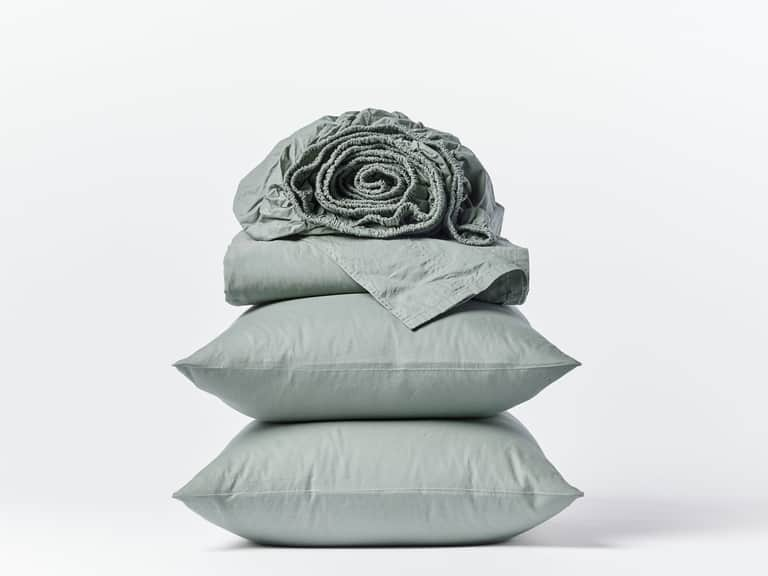
Naturepedic’s Organic Cotton Percale Sheet Sets are described as lightweight, breathable, and crisp, with a matte finish. The 300-thread-count fabric is made from GOTS-certified organic cotton percale. The set includes a fitted sheet, flat sheet, and pillowcases, and the fitted sheet has a 15-inch pocket. These details provide useful context when comparing percale options: the weave tells you about the general character, while fabric specifications and fit help you assess the specific set.
Another example is the Organic Crinkled Percale Sheet Set, made from 100% organic cotton and described as lightweight and cool to the touch. Its natural crinkled texture gives the familiar percale feel a more relaxed appearance. A deep 15-inch fitted-sheet pocket is designed to fit a range of standard bedding setups, while cold, gentle-cycle washing and low-heat drying are recommended.
Why sateen feels smoother and softer
Sateen is woven with a different arrangement of yarns. In a common four-over-one construction, a yarn passes over several yarns before going under one. That pattern leaves more of the yarn surface exposed on the face of the fabric, producing a smooth hand and a subtle sheen. The result often feels softer and more fluid than percale from the first touch.
Sateen’s drape is part of its appeal. It tends to fall gently over the bed rather than holding a crisp, structured outline. If you like bedding that feels sleek and enveloping, or you prefer a smoother finish against your skin, sateen may suit you. Its more lustrous surface can also give a bedroom a slightly dressed-up look without changing the rest of the bedding.
Because sateen can feel more substantial and smooth, some sleepers find it warmer-feeling than percale. That is a useful preference to consider, but it should not be treated as a guarantee about temperature. The actual experience depends on the fabric’s weight, room conditions, the rest of the bedding, and your body’s own response to heat. If temperature is a priority, compare the full product details and pay attention to how you sleep through different seasons.
Naturepedic’s Organic Cotton Sateen Sheet Sets offer a point of comparison for shoppers drawn to a smoother finish. The listed fabric is GOTS-certified organic cotton sateen at 400 thread count, described as soft with a subtle sheen and a gentle drape. The collection includes a fitted sheet with a 15-inch pocket, and the care guidance calls for warm machine washing and low tumble drying. Check the current product listing for available sizes, colors, and specifications before choosing.
A higher thread count is not, by itself, a promise of superior comfort. Fiber length, yarn construction, finishing, and the weave all contribute to how a sheet performs. A 300-thread-count percale may be a better match for someone who wants a crisp, airy surface, while a 400-thread-count sateen may appeal to someone who prioritizes smoothness. The numbers are one part of the picture, not a verdict.
Percale vs. sateen at a glance
When you are weighing percale versus sateen, focus on the differences you are most likely to notice night after night:
- Surface: Percale usually has a crisp, matte finish; sateen is generally smoother and may have a subtle sheen.
- Drape: Percale tends to feel light and structured, while sateen often falls more fluidly across the bed.
- First impression: Percale may feel freshly laundered and clean-lined; sateen may feel soft and polished.
- Temperature preference: People who like an airy, cool-touch feel often gravitate toward percale. Those who enjoy a smooth, more substantial-feeling surface may prefer sateen.
- Appearance: Percale’s matte look suits a relaxed, understated bed; sateen’s soft glow can create a more lustrous finish.
- Break-in: Percale may relax with washing, while sateen is often selected for its smooth feel from the beginning. Actual changes depend on the product and care.
These are general tendencies, not strict rules. Finishing techniques, cotton yarns, fabric weight, and individual sensitivity can shift the experience. If possible, compare fabric swatches or feel both weaves in person. If you are shopping online, read the material and care descriptions carefully rather than judging by product photography or thread count alone.
Organic describes the cotton—not the weave
“Organic cotton” and “percale” answer different questions. Organic refers to how the cotton is grown and, depending on the certification, how parts of the textile supply chain are managed. Percale describes the weave. The same distinction applies to sateen: sateen can be woven from organic cotton, conventional cotton, or other fibers, depending on the product.
When organic sourcing is important to you, look for precise information about fiber content and certification. A certification such as GOTS—Global Organic Textile Standard—can offer a framework for assessing organic textile claims and processing requirements. Certification scope matters, so check whether the claim applies to the finished product, a particular material, or another part of the supply chain.
It is also useful to separate material claims from comfort claims. Organic status does not by itself guarantee a particular softness, temperature, or durability. Those qualities depend on construction, finishing, laundering, and use. In the same way, a soft hand does not reveal whether the cotton is organic. Clear product details let you evaluate each consideration on its own terms.
For a practical comparison, start by deciding which weave sounds closer to your preferred feel. Then review the cotton content, certifications, dimensions, fitted-sheet pocket depth, included pieces, and care instructions. That sequence keeps the decision grounded in the details you will live with, rather than a single headline number.
Thread count: useful information, but not the whole story
Thread count refers to the number of threads counted within a square inch of fabric, though counting conventions and yarn construction can affect how figures are presented. It can help describe a sheet, but it cannot tell you exactly how that sheet will feel. A higher number is not automatically a sign of better quality, greater breathability, or longer life.
Consider thread count alongside weave and fiber. A crisp percale construction and a smooth sateen construction can deliver very different sensations even when their listed counts are relatively close. Cotton staple length and yarn quality also matter; longer fibers can be spun into smoother, stronger yarns, while finishing can change the feel of the fabric when it arrives.
For Naturepedic’s organic cotton options, the available descriptions illustrate the point: the percale sheet set is listed at 300 thread count, while the sateen sheet set is listed at 400 thread count. Those figures are useful specifications, but the more meaningful question is whether you prefer the cool, crisp character of percale or the smoother drape of sateen.
Care habits can influence how sheets feel
Good care helps preserve comfort and appearance, but the best routine is the one specified for the particular sheet. Organic cotton percale and sateen products do not all have identical finishes or care requirements. Check the sewn-in label or current product instructions before washing, especially if the bedding has a special texture, print, or finish.
As a general starting point, avoid overloading the washer so water and detergent can move through the fabric. Use a suitable detergent amount, and skip harsh treatments unless the manufacturer says they are appropriate. Excess detergent can remain in fibers and affect their hand. High heat may also contribute to unnecessary wear or shrinkage, so follow the recommended drying temperature and remove sheets when they are dry.
For the Naturepedic examples above, the percale sheet set is listed for warm washing and low tumble drying, while the organic crinkled percale set calls for a cold, gentle cycle and low tumble drying. Naturepedic’s sateen set is listed for warm machine washing and low tumble drying. Those differences are a reminder to follow the instructions for the exact product, rather than assuming that every cotton sheet should be washed in the same way.
Washing new sheets before use may be helpful if the care label permits it. For day-to-day upkeep, rotating between sets gives each one a chance to rest between uses and can reduce wear from constant laundering. Keep fitted sheets folded or stored in a dry, well-ventilated place to help them stay fresh between changes.
A fit check matters as much as a fabric check
Even a beautifully made sheet can be frustrating if it slips off the corners or bunches under you. Before ordering, compare your mattress dimensions with the fitted sheet’s stated size and pocket depth. Mattress toppers and pads add height, so measure the full sleep surface rather than relying on the mattress label alone.
Both the Naturepedic organic cotton percale sheet set and the organic cotton sateen sheet set are listed with a 15-inch fitted-sheet pocket. The crinkled percale sheet set also specifies a 15-inch pocket. Check the product listing for current size options and confirm that the depth works for your mattress, including any topper or protector.
Review what the set includes, too. Sheet sets commonly contain a fitted sheet, a flat sheet, and pillowcases, but pillowcase sizes and quantities can vary with the selected bed size. If you are refreshing only part of your bedding, make sure the included pieces match what you need.
How to choose the right organic cotton sheets for you
A few honest questions can make the choice easier. Think about the sheets you have liked in the past, how warm you feel overnight, and what kind of texture you reach for when you settle into bed. Then use those preferences to narrow the field.
- Choose percale if you are drawn to a crisp, matte surface, prefer a lightweight feel, or often look for bedding that feels cool and airy.
- Choose sateen if you prefer a smoother hand, a softer drape, and a touch of sheen.
- Consider crinkled percale if you like percale’s breathability but want a relaxed texture and an easygoing, less formal appearance.
- Review certification details if organic sourcing and textile standards are important parts of your decision.
- Check dimensions and care if you have a deep mattress, a topper, a particular laundering routine, or limited drying options.
There is no requirement to commit to one weave forever. Some households keep percale for warmer months and choose sateen when they want a smoother, more enveloping feel. Others settle on one style because it suits the room and sleep habits in every season. If you are unsure, consider starting with the weave that best matches your everyday preference, then make a second choice only after you have lived with it for a while.
The bottom line on percale and sateen
Percale and sateen show how much construction can influence the feel of organic cotton sheets. Percale’s balanced weave is associated with a crisp, matte, breathable character; sateen’s arrangement creates a smoother surface, gentle sheen, and softer drape. Neither is inherently the right answer for every sleeper.
When comparing Naturepedic sheets, look beyond the thread-count figure. Weave, personal temperature preferences, fabric finish, certification, fitted-sheet depth, and laundering instructions all help complete the picture. If a cool, clean-lined feel sounds appealing, percale may be your match. If you want smoothness and a more fluid finish, sateen may feel more at home on your bed.
The best choice is ultimately the one that makes your nightly routine more comfortable and fits the way you care for your bedding. Start with the texture you love, verify the practical details, and let the weave—not a number on a label—guide the final decision.